|
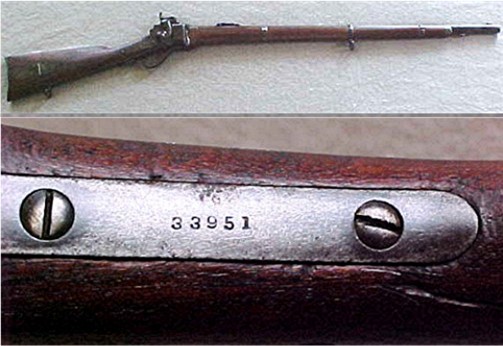
NEW MODEL 1859 SHARPS NAVY RIFLE – IDENTIFIED BY
SERIAL NUMBER AS HAVING BEEN SHIPPED TO THE WASHINGTON
NAVY YARD IN 1860 – AN EARLY IDENTIFIED SHARPS RIFLE IN
VERY NICE CONDITION: This New Model 1859 Sharps
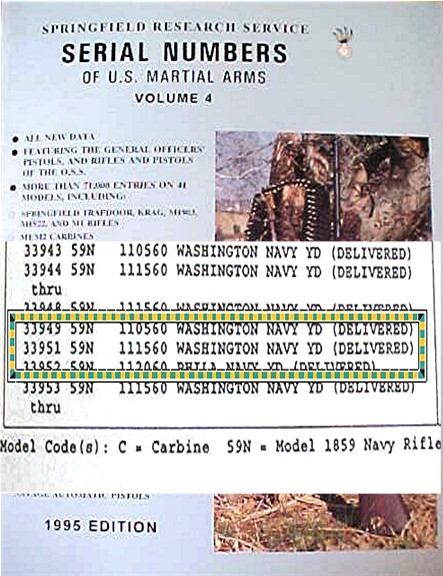
Navy Rifle, Serial Number 33951, is recorded in US
Military documents held in the National Archives as
having been delivered to the Washington Navy Yard,
Washington D. C., on November 15, 1860. This particular
Sharps Navy Rifle is listed by its unique serial number
in the Springfield Research Service publication,
Serial Numbers, Volume 4, on page 259. A letter of
confirmation has been obtained from the Springfield
Research Service to document this historical record and
the letter will be included in the sale of this rifle.
As John McAulay writes on page 48 of his Civil War
Small Arms of the U.S. Navy and Marine Corps, the
United States Navy placed the first order for the New
Model 1859 Sharps Rifle. In September of 1859 the Navy
ordered 900 Sharps NM 1859 Rifles, stipulating 30”
barrels fitted to be mounted with a saber bayonet – the
bayonets to be provided by the Ames Manufacturing Co.
Falling within the serial number range of 33000 to
34000, the first 630 of these rifles were delivered in
November of 1860 – 510 to the Washington Navy Yard and
120 to the Philadelphia Navy Yard, with the balance of
this first order arriving by the outbreak of the Civil
War. These rifles were quickly placed into service
aboard the Navy’s vessels being deployed from the New
York, Philadelphia and Washington Navy Yards and by the
summer of 1861, the Navy had ordered and received an
additional 1500 Sharps Navy Rifles. One of the first
engagements in which these Sharps Navy Rifles were used
was at Mathias Point, Virginia on June 27, 1861.
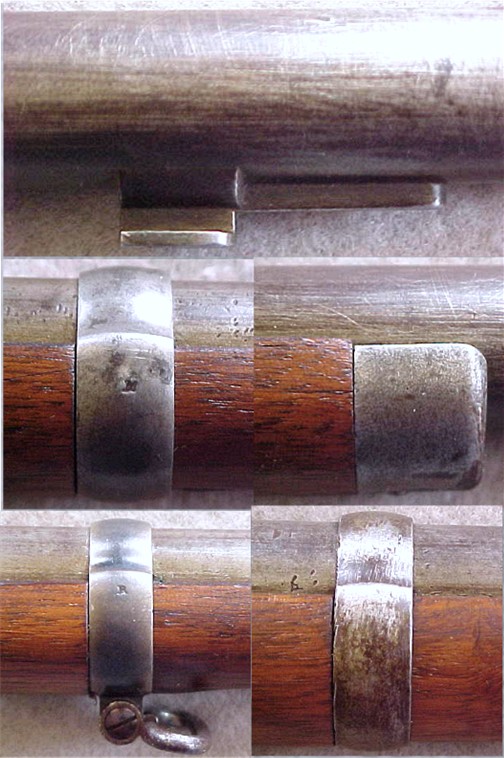
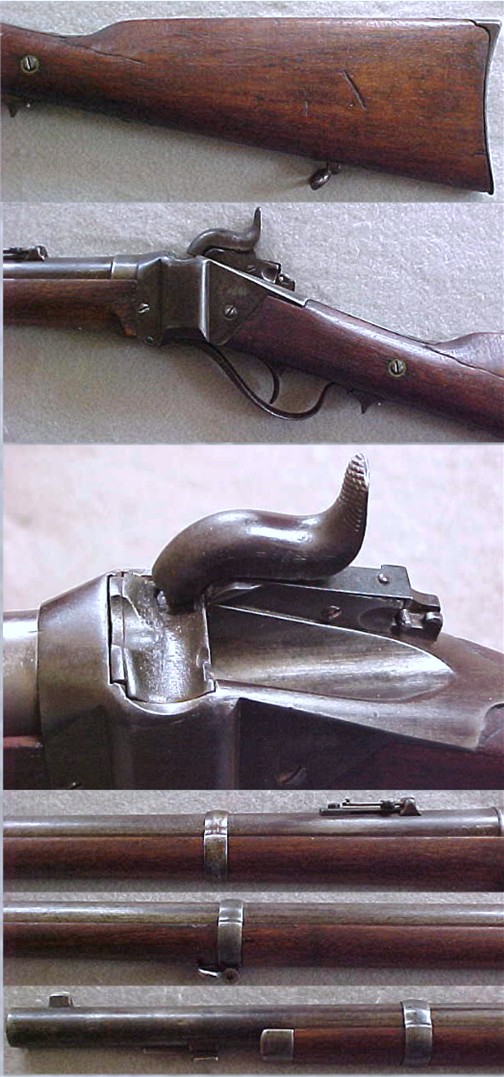
Showing evidence of having been issued and subjected to
use without any signs of abuse or neglect, the metal and
wood surfaces show aging commensurate with Navy small
arms which were subjected to the harsh environment of a
ship at sea during the Civil War, and within the context
of the history of this rifle, it has survived in
remarkably very good condition. The metal surfaces bear
an overall naturally aged brown patina. The metal was
subjected to cleaning as would be expected on arms
carried aboard ship, but the cleaning appears to have
occurred during the period of the rifle’s use. There
are scratches in the metal that have the characteristics
of the scouring wire or sand that would have been used
aboard ship to maintain their arms.
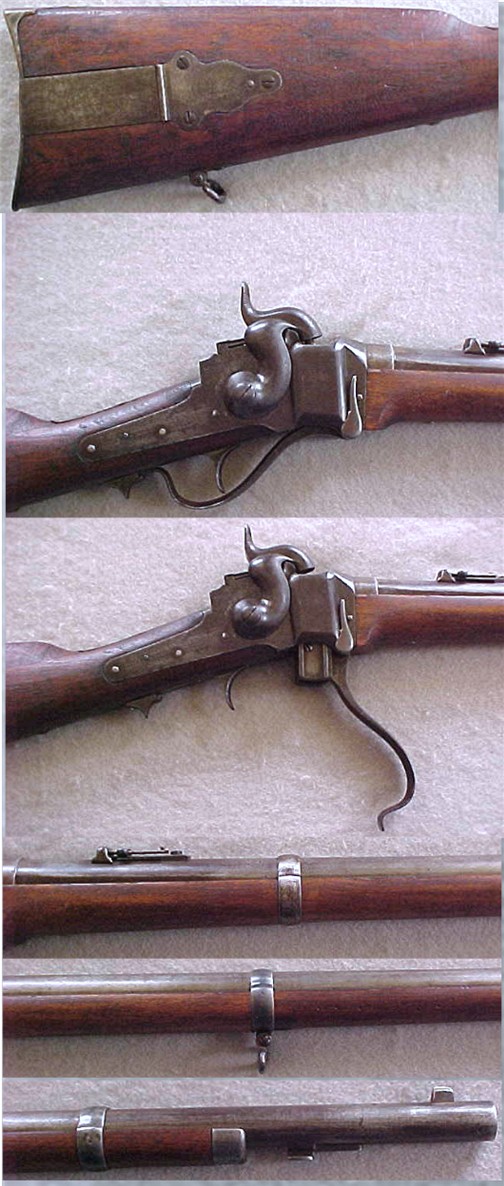
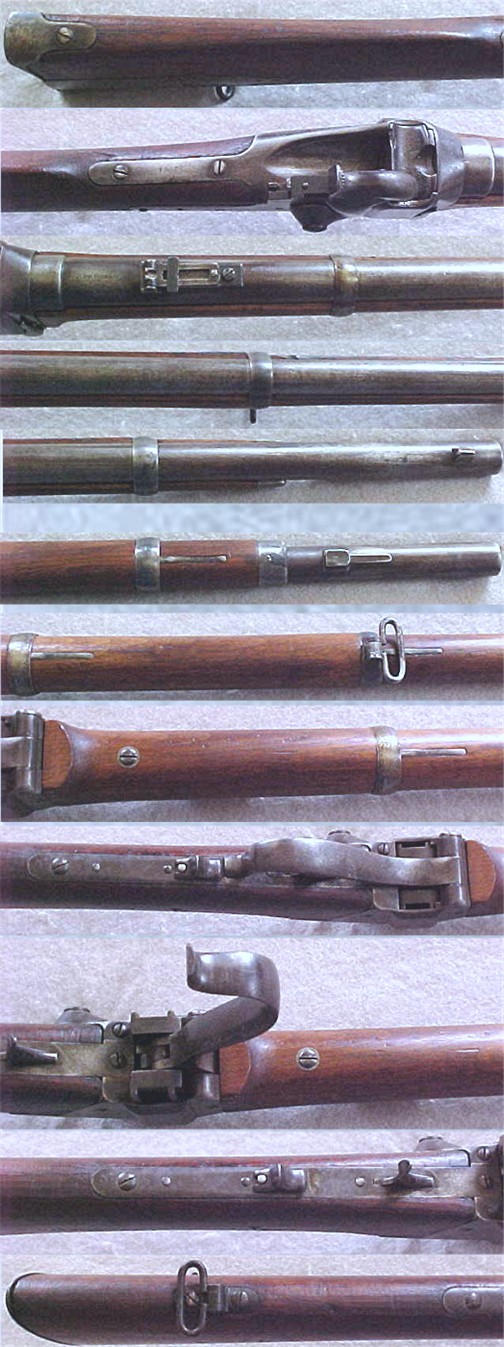
The lock mechanism and
breech block function properly with a crisp action. The
percussion cone is full form and has not been peened by
careless dry firing.
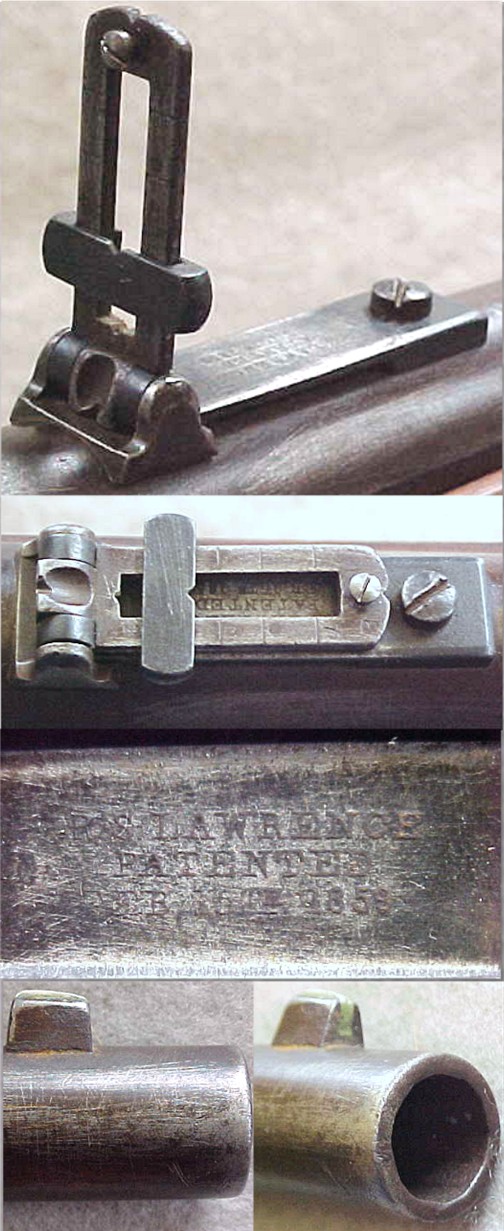
The Lawrence Primer System
is intact and is still functional. The bore features
distinct lands and grooves, and strong rifling for its
full length, and while the bore is somewhat darkened, it
appears that it would brighten with some effort.
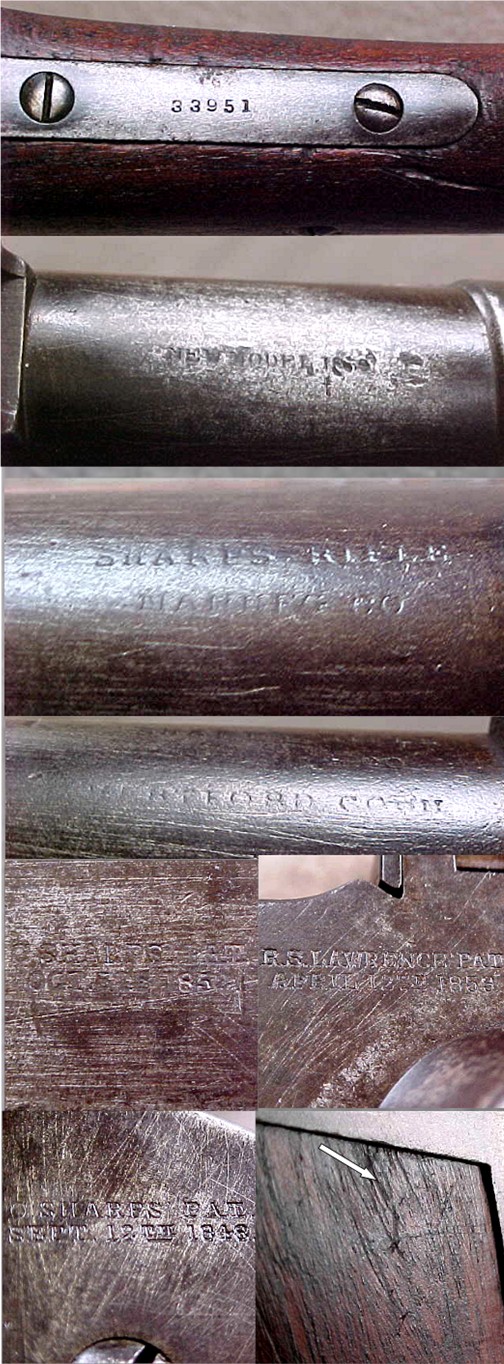
All of the Sharps manufacturing and patent information
stamps are present and legible on the lock plate,
receiver, and barrel, as is the Lawrence patent
information present on the rear sight base. The serial
number on the upper receiver tang is present and fully
legible. Although Frank Seller’s states on page 81 in
his SHARPS FIREARMS that the New Model 1859
Rifles fall within the serial number range of 36000 to
60000, the serial numbers of the New Model 1859 Navy
Rifles received by the US Navy which appear in the
records held by the National Archives bear out the
additional serial number range of 33000 to 34000 as
reported by McAulay.
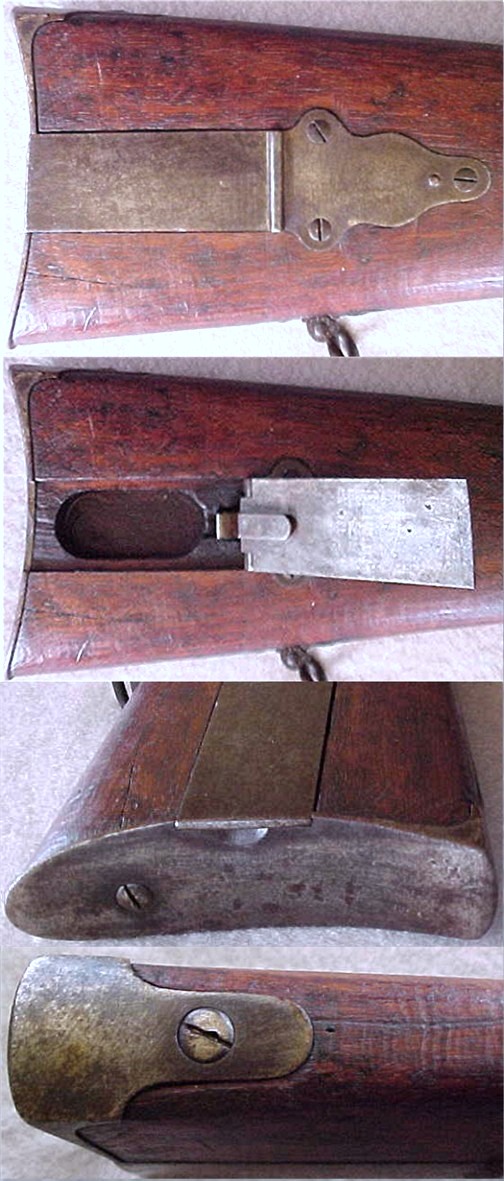
The condition of the butt stock and forearm is quite
nice. The forearm is overall smooth with crisp edges to
the barrel channel and only a few minor handling dings.
The butt stock is full form, even to the point that the
toe of the stock is fully intact without the
characteristic chip missing as is so often found. The
butt stock shows more wear than does the forearm – not
abuse, but perhaps a function of how the rifles were
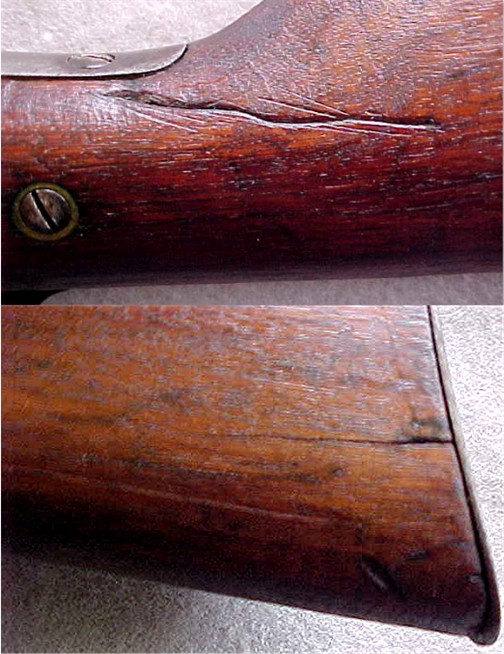
stored or racked aboard ship. There is an age check in
line with the lower butt plate screw, quite small and
stable. There is a gouge running from the rear tang
screw back towards the left side of the butt – not deep
and definitely not a crack. Otherwise, the butt stock
is solid and is tight to the receiver with no movement.
There is no distinct cartouche, but there is a regular
outline of what may be a cartouche or a ship’s inventory
stamp immediately adjacent to the forward upper left
corner of the stock where it abuts the receiver (see
photograph below).
In spite of incredible odds against it, this New Model
1859 Navy Sharps Rifle has managed a remarkable trifecta
by surviving the passing years in any condition –
a relatively scarce model – one of only 2400 from the
first contract; remaining in its original configuration
without being subjected to any of the common post-war
modifications; and having an absolute identification to
a specific Civil War Navy Yard documented through
records held by the National Archives.
The collecting fraternity continually searches for those
very special pieces which by the virtue of their firm
historical association can transport us back to a
specific place and time by simply cradling them in our
hands, and stimulate our imaginations to reach out to
the soldier, sailor, cowhand or warrior who carried
them. This New Model 1859 Sharps Navy Rifle is such a
piece, seldom encountered, and sure to be a key addition
to any collection. (0911) $6750
|