Mc Pheeters Antique Militaria
Home Page About Us Ordering Information Links


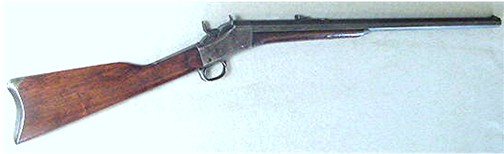
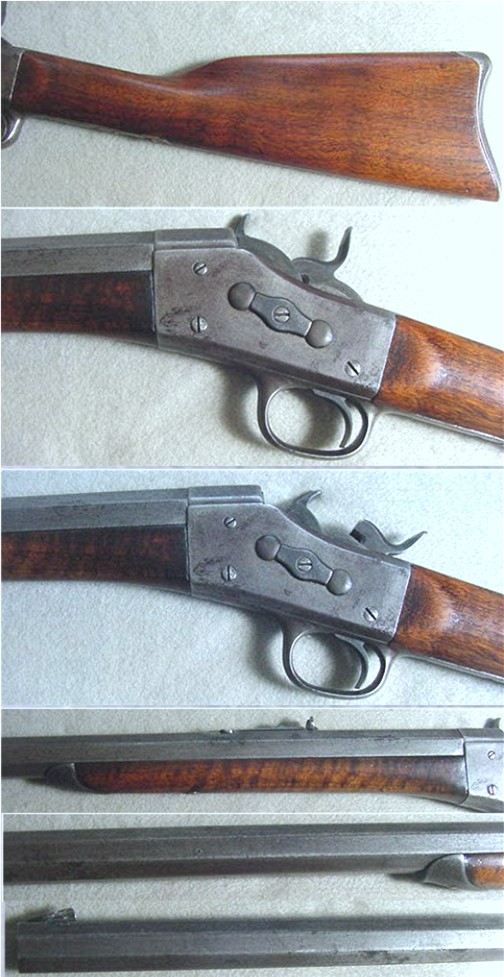
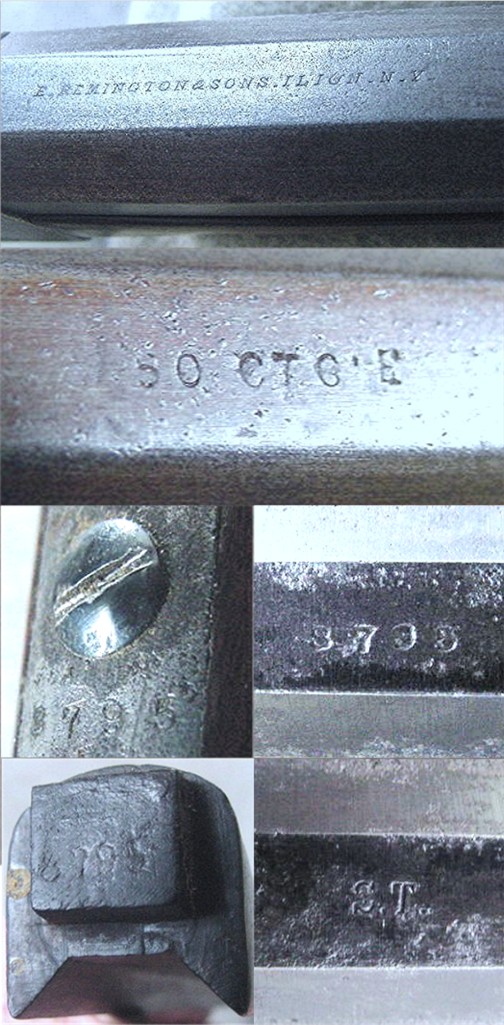
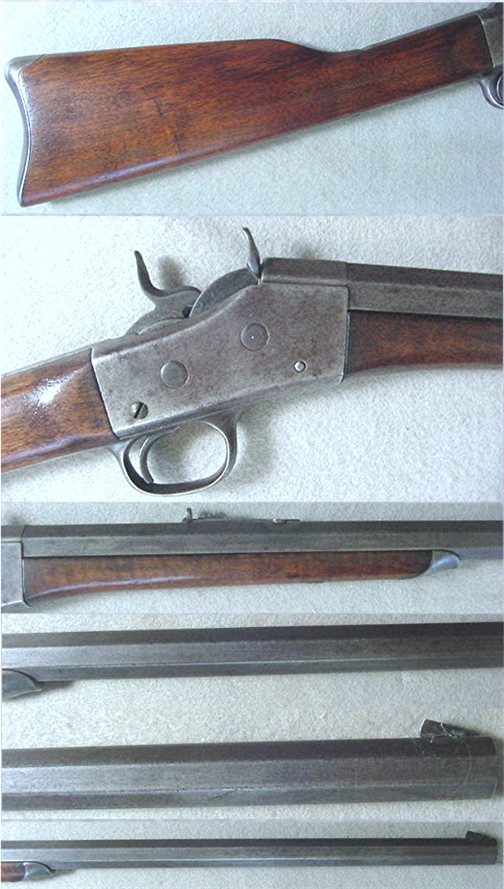
MODEL 1870 SPRINGFIELD TRIAL CARBINE - VERY NICE SPECIMEN OF AN EARLY INDIAN WARS TRAPDOOR:  The Model 1870 Springfield Carbine is the crown jewel of the early Indian Wars Cavalry carbines, and is often missing from all but the most advanced collections due to limited production and a low survival rate.  Produced for the 1870 Trials, it is generally accepted that approximately 341 of these scarce carbines were manufactured, with the vast majority having been issued to the regiments serving on the Western frontier and subjected to heavy use.  This Model 1870 Springfield Carbine shows evidence of that frontier use, but still retains a pleasing overall appearance and the correct components.   

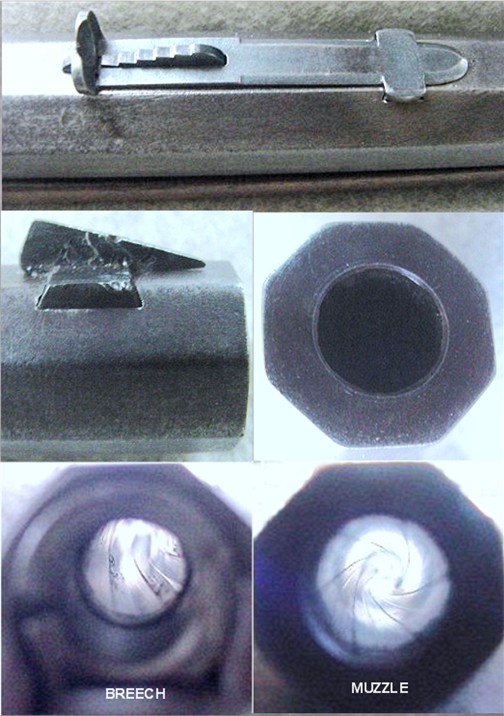
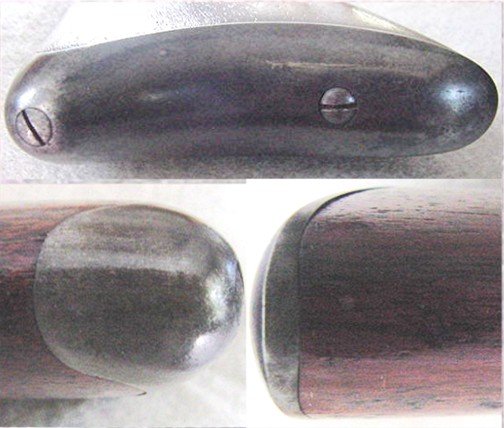
The correct high arch breech block is properly marked 1870 and US with the eagle head and crossed arrows, and the lock plate is dated 1864.  All of these markings to include the eagle and the “US SPRINGFIELD” on the lock plate are distinct and fully legible.  The correct carbine rear sight is present and still retains much of its original black finish.  The bore is overall bright with very strong rifling and only a minimal scattering of shadows of light pitting.  The barrel measures .775” at the muzzle and .900" just in front of the forearm tip, confirming this is an original carbine barrel and not a cut down rifle barrel used to make up a carbine as is sometimes encountered.  The front sight blade is steel.  While the standard configuration for the front sight generally has been accepted to be a brass sight blade, replacing worn out sight blades was a task fully within the capability of a unit level Ordnance Sergeant and it is likely that steel blades would have been far more available when such a replacement was necessary.  It is worthy of note that while the M1870 Springfield Carbine was equipped with a brass sight blade, the Ward Burton M1870 Carbine, also manufactured at Springfield for the same trial group, was equipped with a steel front sight blade.  The breech block and receiver still retain traces of the original black oil quenched finish.  The action of the lock and the function of the breech block are both crisp and tight.  The metal surfaces of the barrel, breech block, receiver, lock plate, barrel band, and trigger group are overall very smooth, have the proper bright finish, and would brighten more if you were so inclined.  The “US” marked butt plate is pitted, likely from resting on a damp surface, however it definitely appears original to this carbine and does add to the overall character of this piece.  This carbine was originally purchased from an old collection in the Southwest where it had been held for many years.  When purchased, the sling bar assembly had been removed and the lock screws had been reduced in length accordingly.  As these carbines transferred through reissue from the regular army soldiers to hands of scouts – both white and Indian – packers, teamsters and other auxiliaries, or issued to civilian settlers or the tribal groups in residence on the reservations, the sling ring bar was often regarded as unnecessary and was commonly removed as a nuisance.  A reproduction sling bar has been substituted for the original to return the carbine to its full configuration held in place with a set of original, full length lock screws.  It would be worth the effort to continue looking to for an original sling bar, but in the meantime this carbine displays nicely with the replacement.   

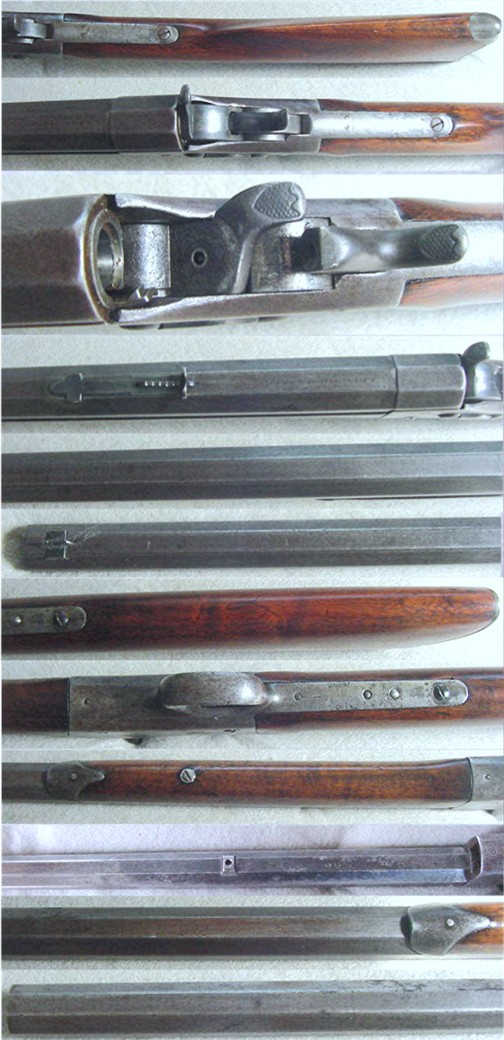
The overall smooth stock features the rich color of patinated walnut, with only minimal signs of wear and handling marks.  It is possible that the stock was refinished at some point in its life, as the there is only a trace of the outline of the “ESA” cartouche on the sling bar flat, and likewise a partial outline of the boxed “L” firing proof below the rear trigger guard tang.  There is a very fine age check at the rear of the lock mortise that is stable and limited in length.  This is a small sliver of wood missing at the top edge of the receiver channel directly adjacent to the breech block hinge pin tang and another small sliver missing along the right side of the receiver tang.  With the exception of these two small points of wear, there is no other damage or wood loss.  There is a faint set of initials – a P and an I – hand drawn into the surface of the wood on the flat of the left side of the butt stock.  As seen on a considerable number of guns that were used on the Frontier, this carbine has a small screw hole in the wood immediately to the right and a little behind the trigger spurKnown as a “poor man’s set trigger”, when the screw was in place, it could be adjusted against the sear to lighten the trigger pressure necessary to fire the carbine.  The existence of this telling screw hole is further testimony that this carbine “was there”. 

It is well documented that the Model 1870 Carbines were issued in the Southwest to elements of the 1st and 5th Cavalry at Fort Whipple and Camps Grant, McDowell and Verde, Arizona Territory; and to elements of the 8th Cavalry at Forts Craig, McRae, and Union, and Tularosa, New Mexico.  As this Model 1870 was recovered from the Southwest where these trial carbines were likely subjected to almost constant field use, the specific characteristics of this carbine such as the missing sling bar, the replaced front sight blade and the addition of the sear adjustment screw are all consistent with the wear one would expect a gun to have experienced during this era.  Further, these indicators suggest that once this carbine passed out of the inventory of a regular army regiment, it may well have continued to be used by a scout, packer, settler or Indian on the fringe of the Indian War Frontier. 

Overall, this is a very respectable Model 1870 Trial Carbine.  It is an attractive specimen that shows historical use without being used to destruction, and could well be one of the better buys available for one of these scarce early Indian Wars carbines.  $5,500


Ordering Instructions

Identified Items  

Firearms

Edged Weapons

Saddles and Horse Equipment

Accoutrements

Collectors Ammunition

Uniforms, Insignia, Hats

Canteens and Mess Gear

Gun tools, Bullet molds and Parts

Field Equipment and Artillery

Original Ordnance Manuals, and Photos 

US Army Medical

Reference Books and Reprints