|
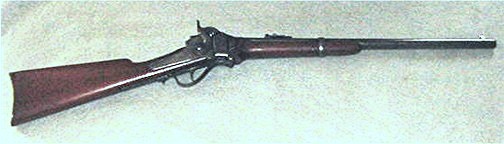
MODEL 1868 SHARPS CARBINE – IDENTIFIED TO COMPANY
E 8TH US CAVALRY – A HISTORIC AND WELL
DOCUMENTED EARLY INDIAN WAR ISSUED CARBINE IN VERY GOOD
CONDITION: Perhaps
the best known specimen of a Sharps Model 1868 Carbine
identified as having been in the inventory of the
Company E, 8TH US Cavalry Regiment, this
exact carbine is featured in a number of published
references such as GUNS OF THE WESTERN INDIAN WARS
by R.S. Dorsey, and at least one article published in
the GUN REPORT magazine, also by Dorsey.
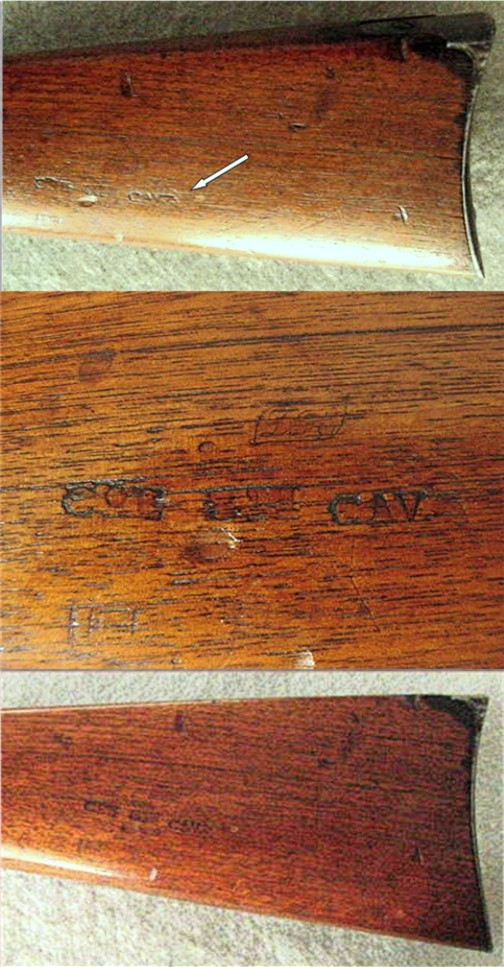
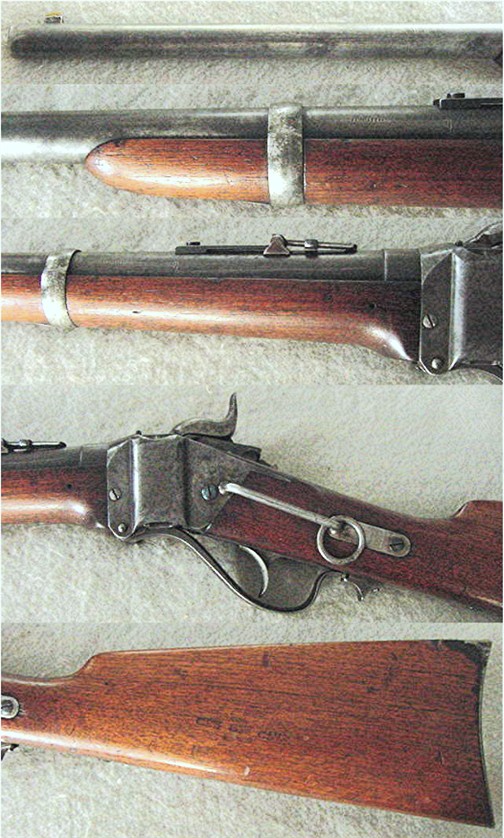
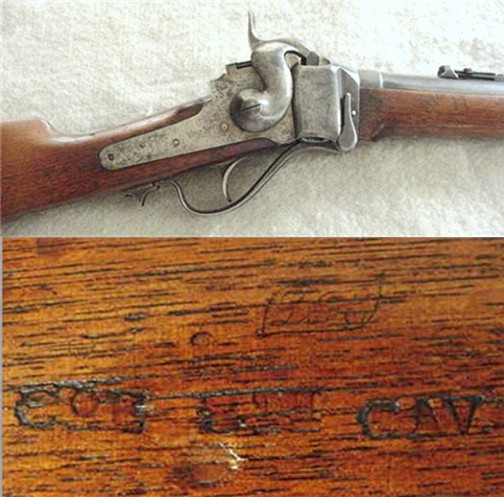
The left side of the carbine’s butt stock is legibly
stamped “Co E 8TH CAV”, establishing the
issue of this carbine to Company E of the 8TH
US Cavalry Regiment The format and font of this
stamping is identical to those present on another Model
1868 Sharps Carbine – stamped in the same location – and
on the grips of three Colt Model 1860 Army revolvers and
a Remington New Model Army – all bearing the same “Co E
8TH CAV” stamping, using the same font and
format.
The 8TH US Cavalry Regiment was created after
the Civil War in 1866, at the Presidio of Monterey,
California as the army reorganized and expanded to meet
the demands of the advancing frontier. During that
early Indian Wars period, the 8TH was
attached to the Department of California, and Company E
was stationed, and saw considerable action, in Oregon
against the Modocs, in Idaho against the Nez Perce and
Bannocks, and in New Mexico and the Arizona Territory
against the Apaches.
As indicated in the summaries of Ordnance Returns
provided on pages 76-78 in Arming and Equipping the
U.S. Cavalry by Dusan Farrington, in 1871 Company E
of the 8TH Cavalry Regiment was stationed at
Ft. Wingate, New Mexico and was armed with the “new”
Sharps Carbine. While there is no doubt that this
carbine was in the hands of a 8TH Cavalry
trooper during the early 1870’s, a collector is tempted
to consider that this carbine may have remained in the
company’s inventory after the issue of the Model 1873
Springfield Carbines. It is known the Sharps carbines
were issued to the packers, teamsters, and scouts who
accompanied the columns of soldiers in the field, and at
times they were used by the soldiers for hunting and
foraging, and such may have been the case when Company E
found itself in the field in the later 1870’s and
1880’s, engaged against the hostile Apaches throughout
the mountains of New Mexico and Arizona.
It is worth noting that while the army did not approve
of such unit identification stamps on the firearms, and
in fact, specifically prohibited the practice via
written orders, there were several units on the frontier
that regularly applied stamped identification marks on
their guns, to include the 3RD, 4TH,
8TH, 9TH, and 10TH
Cavalry Regiments. Of special interest is that as the
army discouraged the practice, and therefore never
established a service-wide standard for content, font,
or placement of the identification stamps on the arms,
each unit developed their own unique criteria and style,
and more often than not, located the stamps on the same
place on the firearms within a company or regiment. The
unique nature of these stamps has proven to be a boon to
modern collectors, as once familiar with the placement
and style of a particular unit’s stampings, the
collector is better equipped to identify genuine stamps
from spurious stamps that may be applied to enhance an
unmarked piece, and as many of these early frontier arms
were used heavily and often show significant wear, in
the cases where a portion of the markings have been
partially worn or obliterated, what markings remain are
sufficient to make a complete identification of the unit
possible.
There is no doubt whatsoever that the stampings on this
specimen are original to the carbine’s period of use,
and that they are indeed genuine 8TH Cavalry
markings. The butt stock is in very good condition with
little of the significant wear commonly encountered on
these Sharps Carbines which were used in the field.
As a result, the fully legible stamping on the butt
stock easily rates as excellent. The buttstock is
stamped “Co E 8TH CAV” in a straight line,
parallel to the bottom edge of the stock, and positioned
midway between the butt plate and the point of the comb
– again, in the same location as the stamping which is
present on the other known Sharps Carbine with the same
stamped identification. Showing only the slightest
amount of wear across the length of the stamping, all of
the characters are fully present and some still retain
the sharp edges which were left standing proud of the
surface when the butt stock was newly stamped. The
stamping on this butt stock is without doubt the best
known surviving example of this unit’s markings on a
carbine. The two correct, and original, inspectors’
cartouches are still present and faintly legible on the
left side of the butt stock – one underneath and just
above the sling ring bar, and the other immediately
above the “8TH” portion of the unit
stamping.
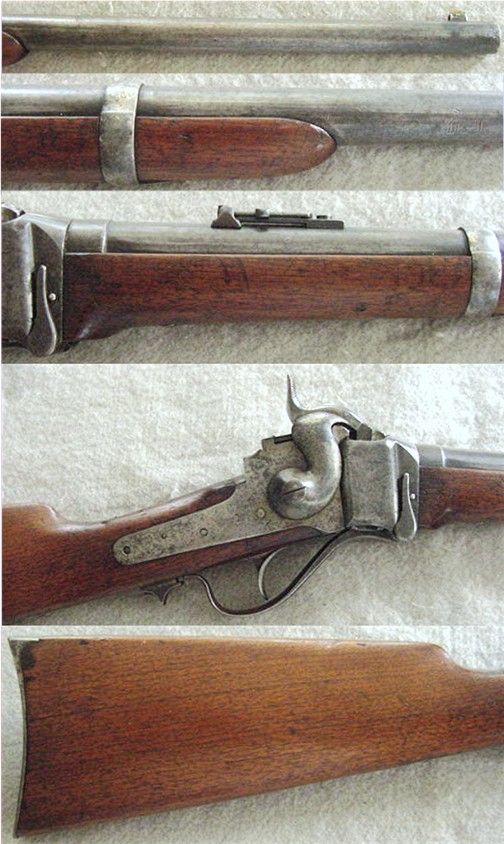
While this carbine shows evidence of issue and use, it
has survived the untold miles of campaigning and the
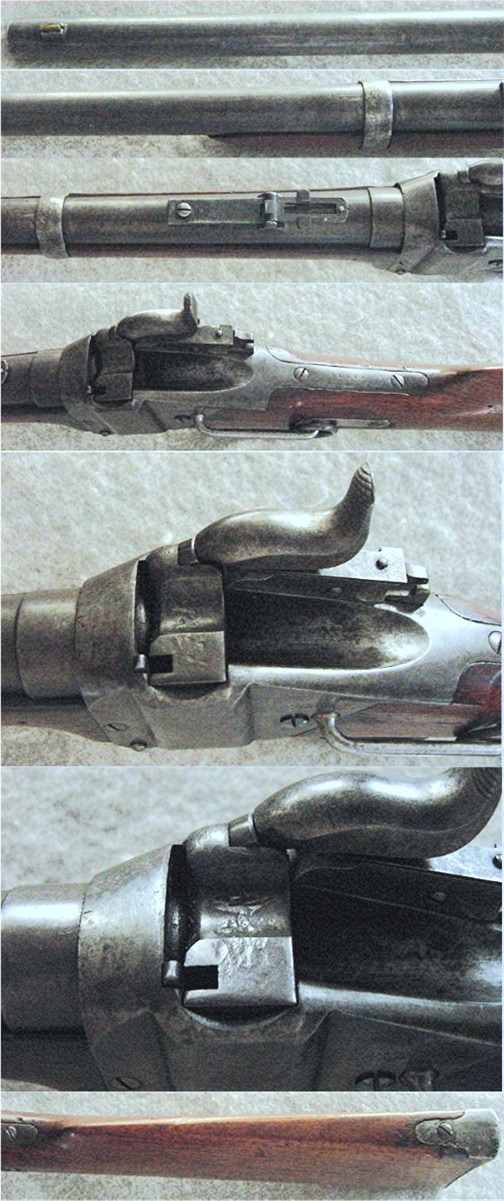
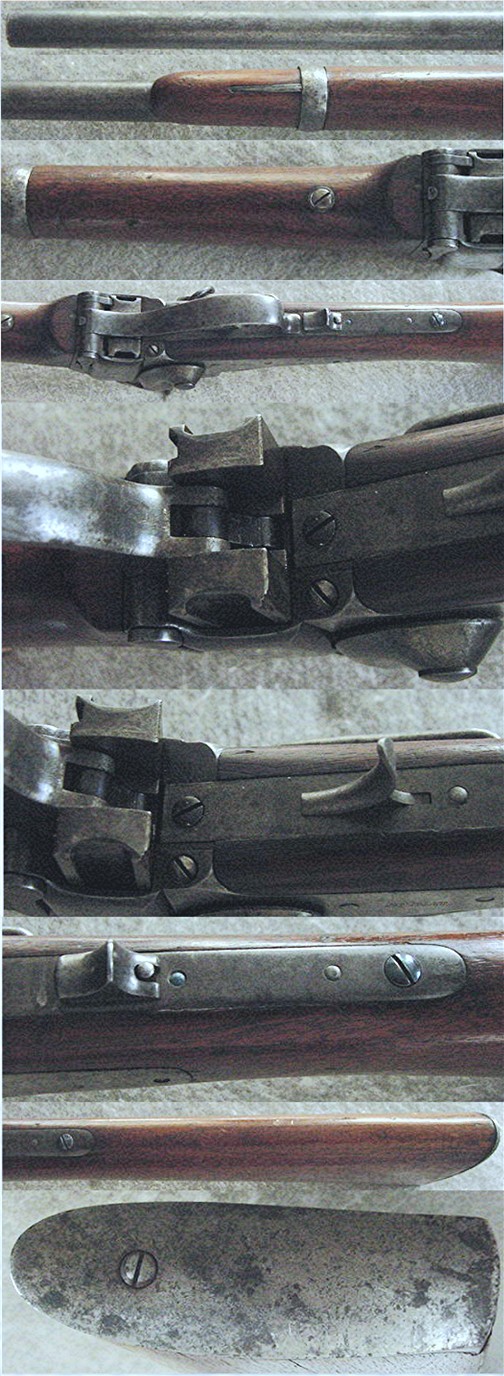
passage of time in remarkable condition. The metal is
overall smooth with a pleasing
even plumb brown color,
with the original bright
blue finish still present under the forearm, and traces
of the original blue elsewhere in protected areas.
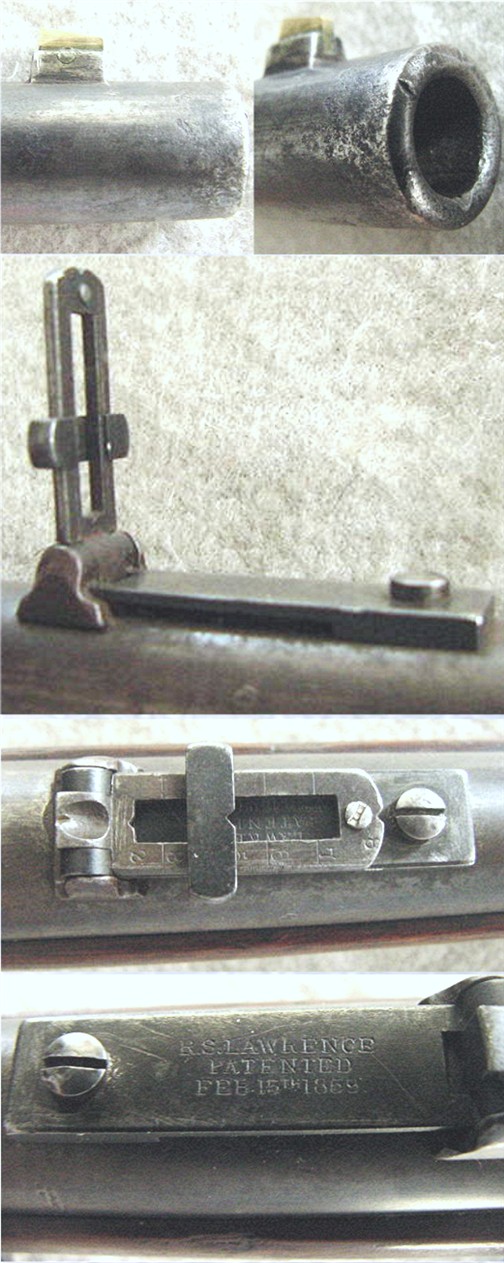
The bore is clean and
bright throughout with no dark patches or pitting, and
distinct clear rifling throughout.
The receiver, breech block,
lever, trigger plate, butt plate and barrel band all
retain visible traces of the case colors. The screw
heads retain much of the original bright blue finish
with no damage or wear to the screw heads. The lock
mechanism and breech block both operate properly,
functioning as crisp as the day the carbine was
manufactured.
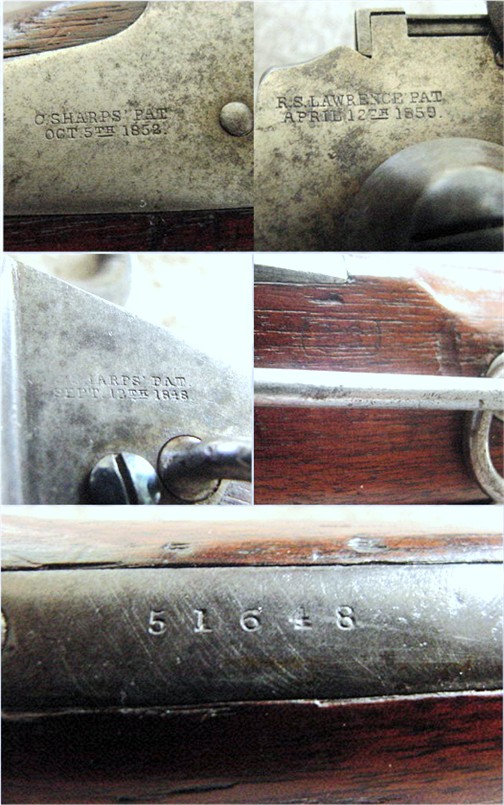
All of the Sharps manufacturing and patent information
stamps are present and legible on the lock plate and
receiver. The original rear sight is fully intact,
functions properly, and the Lawrence patent information
is present and legible on the sight base. The serial
number on the upper receiver tang is present and fully
legible.
The butt stock and forearm are likewise in very good
condition and retain the majority of the original
finish, showing only the slightest handling marks and no
damage or wear. The forearm is full form, with no
splits or chips from the barrel channel edges.
The butt stock is likewise
in full form with the toe still intact, an area often
split away or damaged. There are two longitudinal age
checks in the butt stock wood, very fine and showing no
sign of enlarging or affecting the integrity of the
stock – simply the result of the natural aging of the
wood.
An original copy of the January 1975 issue of the GUN
REPORT magazine which featured a detailed article
covering this particular Sharps Carbine will accompany
this sale.
This is a very nice example of one of the most famous
and highly respected cavalry carbines employed during
the early Indian War years, and of a quality that is
seldom encountered specifically because most Sharps
Carbines were used so extensively during their period of
issue. The added value of being identified to a
specific company and regiment with an established record
of frontier service will make this carbine a star
addition to any collection which will leave no doubt
that you are holding a true piece of Indian Wars
history. These firearms which are identified to the
frontier army cavalry regiments are sufficiently rare
enough to be highly desirable, and as a result they
seldom appear on the market. This is a good opportunity
to add an investment grade carbine to your collection.
(0105) $8500
|