|
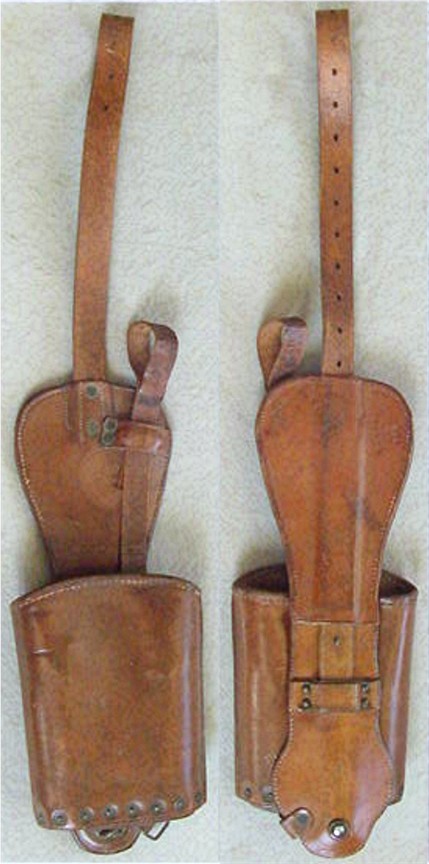
MODEL 1912 RIFLE CARRIER BOOT FOR THE MODEL 1903
SPRINGFIELD RIFLE – AS ISSUED WITH THE MODEL 1912
ENLISTED MAN’S TRIAL SADDLE - ROCK ISLAND ARSENAL
STAMPED - COMPLETE WITH BOTH STRAPS – EXCELLENT
CONDITION: This Model 1912 Rifle Carrier Boot,
as issued to carry the Model 1903 Springfield Rifle on
the Model 1912 Enlisted Service Saddle.
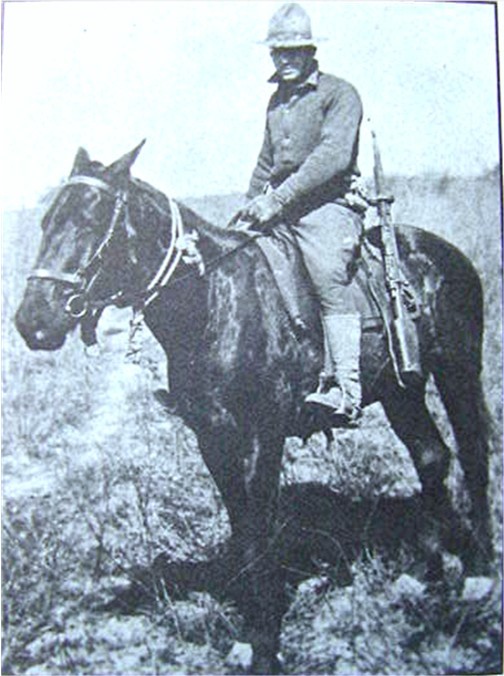
The Model 1912 Rifle Carrier Boot was a component of the
unique, and somewhat complicated, system of interrelated
equipment which defined the Model 1912 Trial Equipment.
The Rifle Carrier Boot’s upper strap attached to the
left, or “near” side, cantle loop on the saddle and was
used in conjunction with the Model 1912 Enlisted
Garrison Belt or the Model 1912 Mills Pocketed Cartridge
Belt – both of which were fitted with a leather padded
belt ring. The rifle was carried upright, with the
muzzle inserted into the belt ring midway down the
forestock, and the rifle’s butt was placed in the
carrier boot’s “bucket”. The retaining strap on the
boot kept the boot upright until the soldier dismounted
and as he dismounted, the retaining strap would feed
out, allowing the boot to pivot away from the horse and
the butt stock of the rifle would be drawn out of the
boot. If you are somewhat confused at this point,
you’re in good company – the soldiers all must have
experienced the same bewilderment at the mind which was
capable of conceiving this system. Nonetheless, this
method of carrying the rifle was not only introduced for
trial, but was apparently used to considerable extent,
most notably during the Punitive Expedition into Mexico
as can be seen in the photograph of the mounted soldier
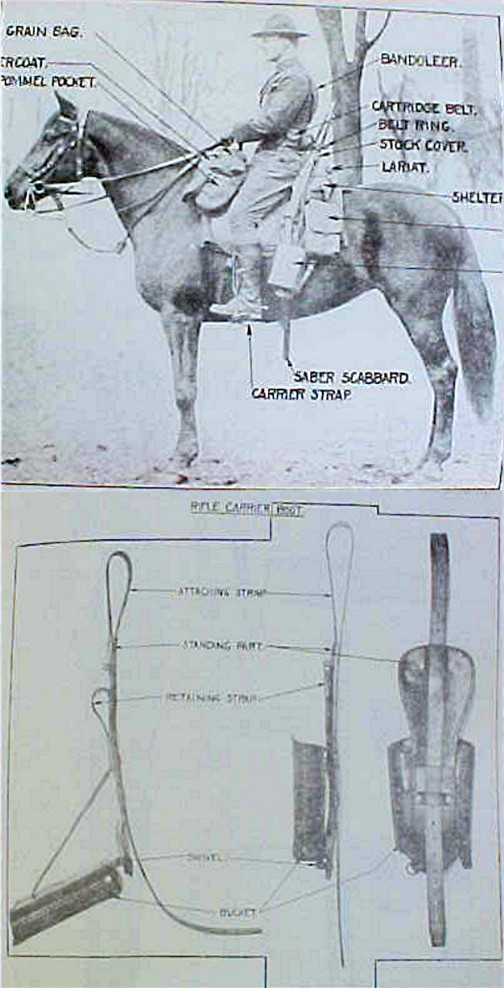
in the field. To fully appreciate how this system of
equipment was employed, see the photograph below of the
mounted soldier, taken from the 1916 US Army manual,
"Description and Directions For Use and Care of Cavalry
Equipment Model of 1912".
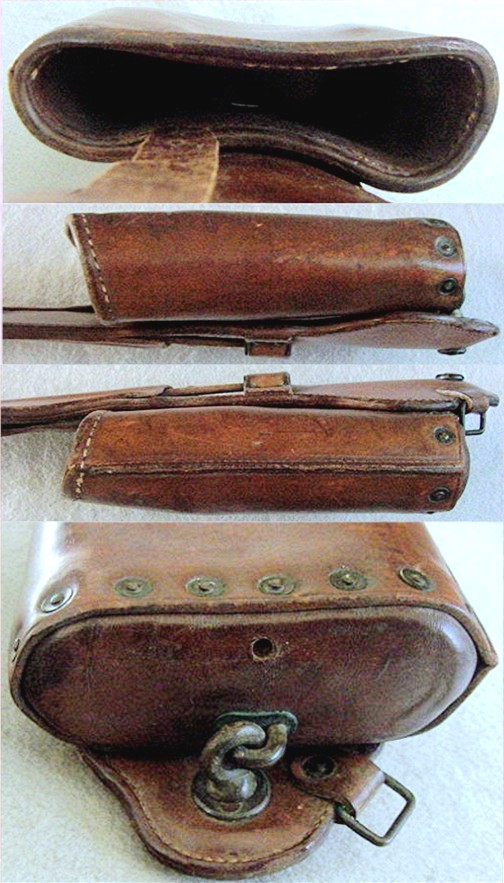
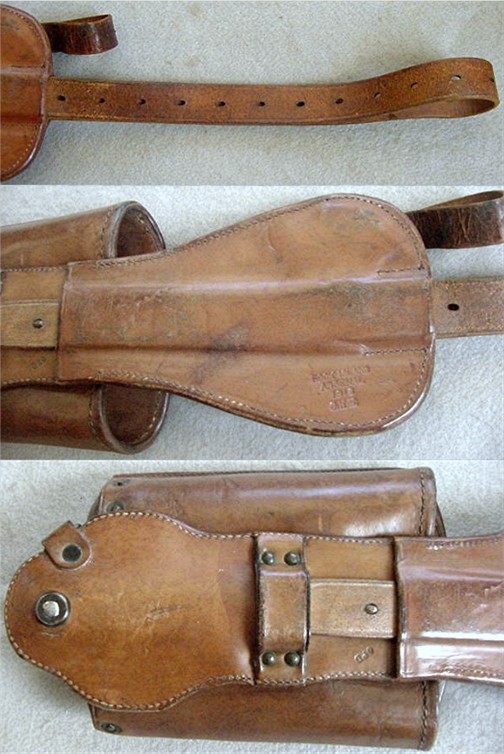
This Model 1912 Rifle Carrier Boot is in excellent
condition. The boot is complete with both of the full
length attaching and retaining straps, and the swivel on
the bottom of the boot is present, intact and fully
functional. The boot holds its shape and is full form.
These
boots are often found oil soaked and misshapen, making
the condition of this specimen notable. The leather
surfaces of the boot and standing plate are particularly
nice, having an even light caramel russet color with
minimal color variances and retaining an even shiny
surface with no crazing or other signs of severe wear
or aging.
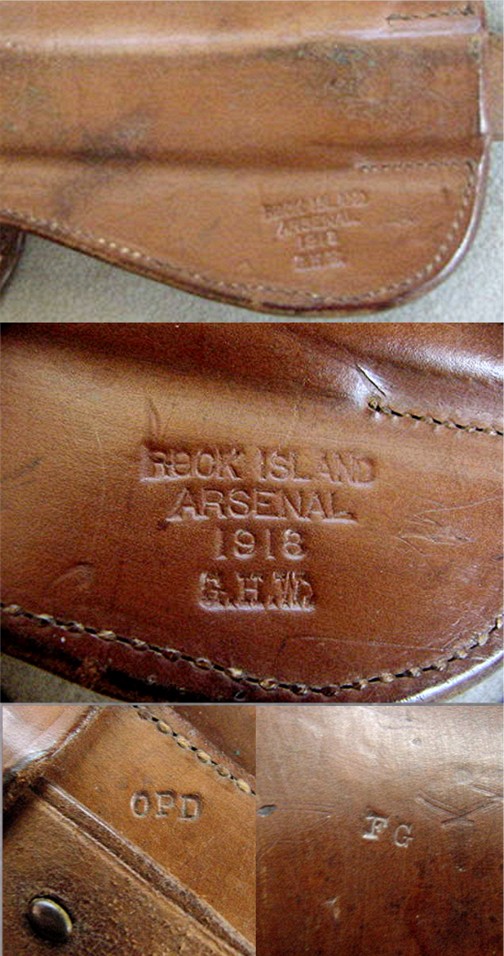
The rear surface of the standing
plate has a bright, legible “ROCK ISLAND ARSENAL” stamp
which includes the date of manufacture, “1918”. The
standing plate and boot bucket are stamped with piece
worker and inspector’s initials. The full length
attaching strap was manufactured with the rough side of
the leather out, proper for much of this 1912
equipment. The retaining strap, also full length, has
some crazing and some minor loss of surface, but it is
still flexible and strong.
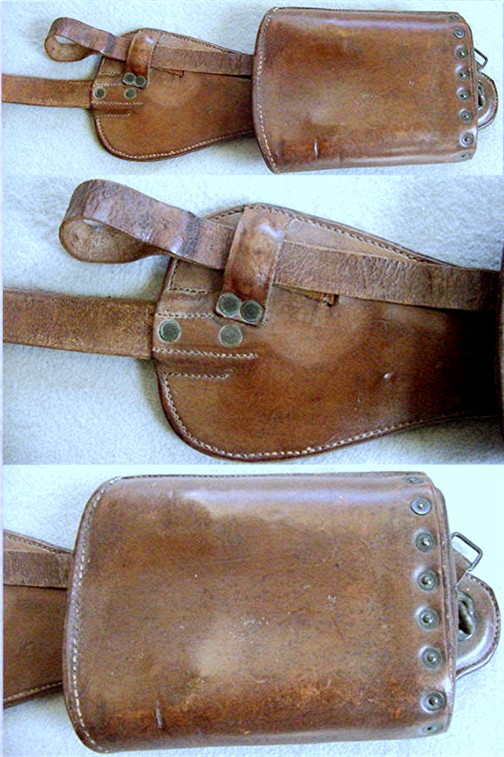
The design of the Rifle Carrier Boot involves the
retaining strap passing through two leather covered
metal arches – one at the top of the standing plate and
one just below the top edge of the boot body opening –
and between the two arches, the retaining strap passes
under the top leather panel of the standing plate. In
order for the boot to rotate out from the perpendicular
and away from the horse’s body, the retaining strap has
to slide through the two arches and the “tunnel” under
the top leather panel of the standing plate. Over time,
the retaining strap and the various leather pieces
covering the arches and standing plate were subjected to
the variances of atmosphere – swelling and shrinking –
until eventually in some cases such as this Carrier
Boot, the retaining strap became locked in place, unable
to slide. The retaining strap is still intact and full
length, and the top exposed section of the strap will
slide easily through the upper arch, however the lower
portion of the strap where it passes under the top layer
of leather of the standing plate, the strap refuses to
move. Rather than put undue pressure on the strap and
risk breaking it, in light of the high overall condition
of this Carrier Boot I recommend this strap be left
alone and not forced. The attaching strap which
attaches the Carrier Boot to the saddle is fully
functional and is robust enough to support the weight of
the boot, allowing the assembly to be properly displayed
on your saddle.
Not a particularly common piece of
US Cavalry equipment, this is an especially nice example
of the Model 1912 Rifle Carrier Boot, and one that would
never need to be upgraded. This scabbard would be a
very special addition to your display of the unique
Model 1912 Trial Equipments.
(0574) $950
NOTE:: I am currently offering
both of the Model 1912 Rifle Belt Ring assemblies issued
to the soldiers in conjunction with the Model 1912 Rifle
Carrier Boot. The Model 1912 Experimental Cavalry
Pocketed Cartridge Belt (click
here) for use in the field, and the Model
1912 Rifle Belt Ring issued for wear on the Model 1904
Russet Leather Garrison Belt (click
here). This is a scarce opportunity to
acquire all three related pieces to complete a display.
|