|
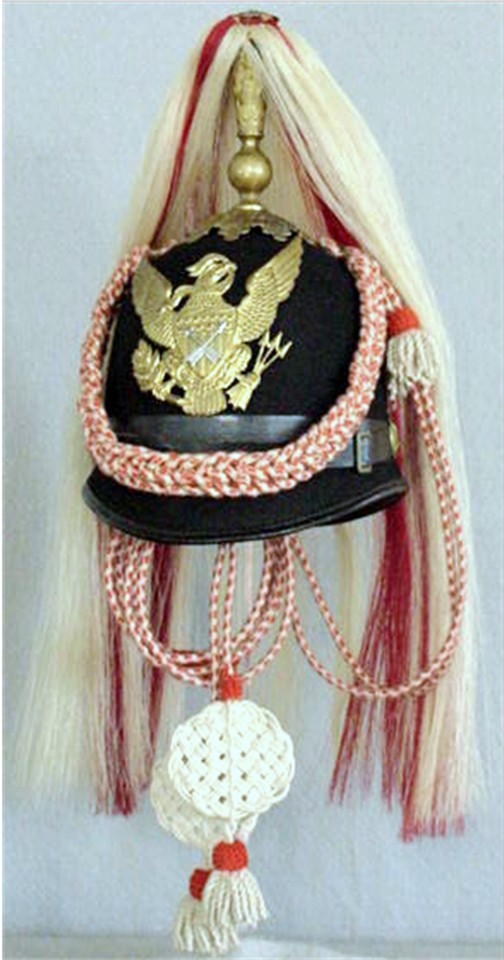
MODEL 1881 INDIAN SCOUT DRESS HELMET – EXCELLENT
SPECIMEN: The combination of collectors’
fascination with the significant history of the Indian
Scouts, and the attractive presentation of the helmet
trimmings, the Model 1881 Indian Scout Dress Helmet has
always been one of the most sought after pieces of
Indian War headgear.
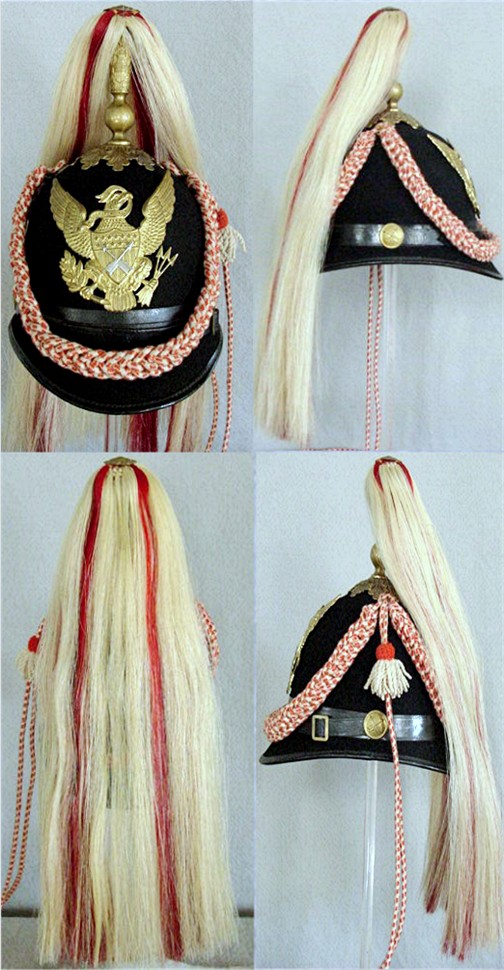
Originally purchased from Bannerman’s, this helmet is
complete with all of the original trimmings. With the
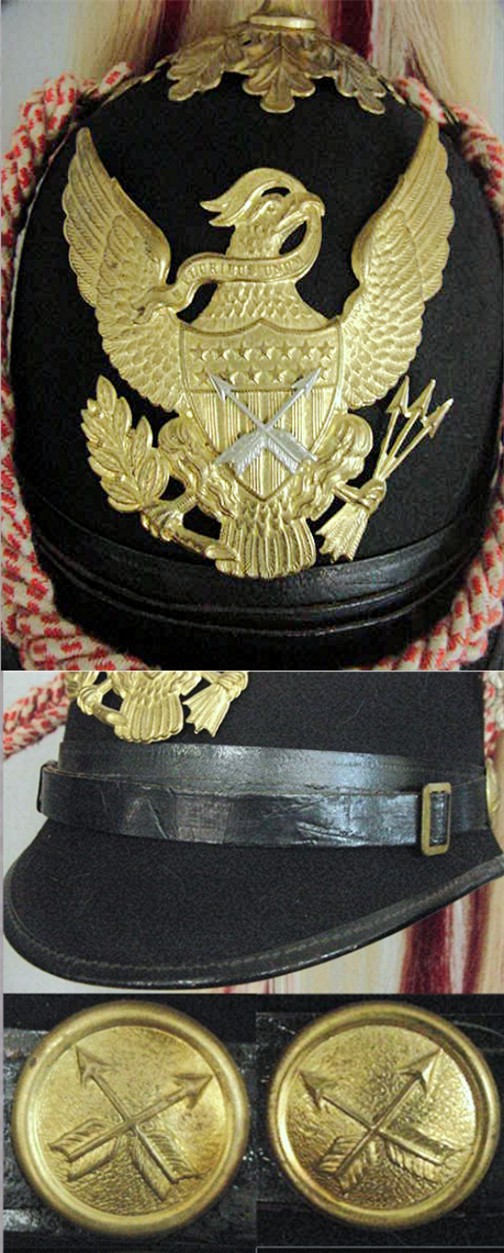
exception of the cords, all of the insignia is original,
to include the red and white plume, plume holder, Indian
Scout side buttons, rings, and the eagle plate with the
crossed arrows device which is original to the plate.
The very scarce original leather chin strap is present,
full length, and intact.
The helmet body is full form with no crushing, breakage,
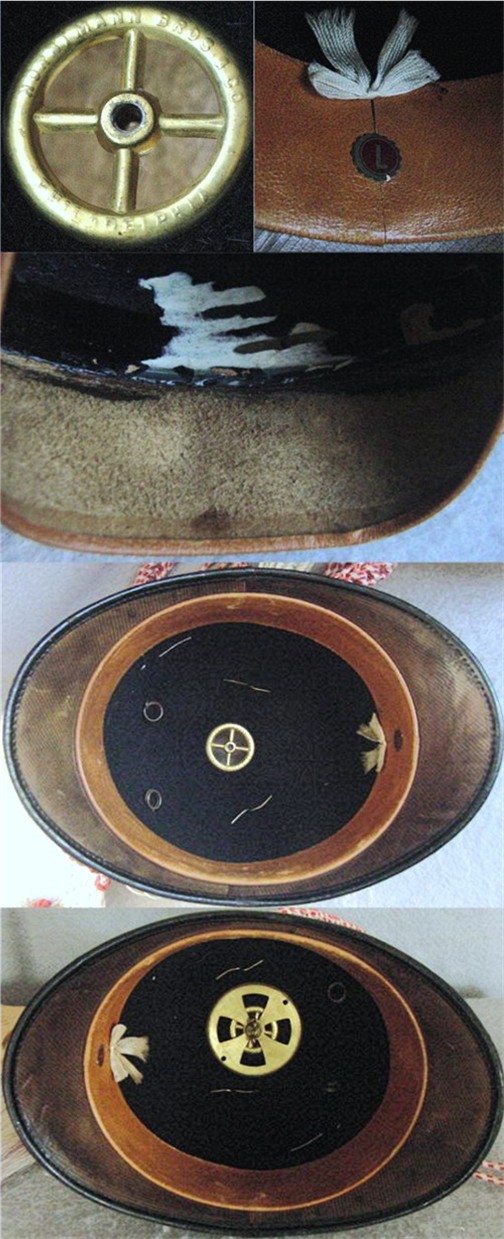
loss of finish or other damage. The size label is
present on the rear of the sweat band. Of particular
note, this helmet body has two features which identify
it as having been produced for one of the early
contracts. The inside surface of the brass ventilator
in the crown of the helmet is stamped with the maker’s
name, Horstman Brothers & Co., and there is the remnant
of the paper makers label still affixed to the helmet
dome under the sweat band. Later production helmet
bodies were normally inked stamped with the maker’s name
on the inside of the sweat band. Overall, the
combination of the early production and the excellent
condition makes this helmet a particularly beautiful
specimen.
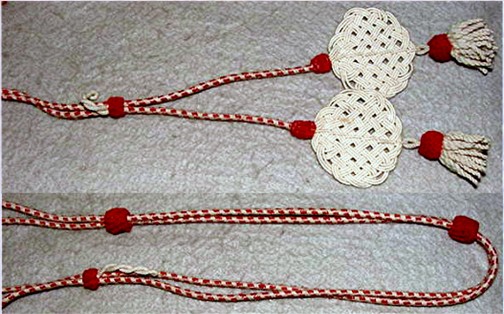
Indian Scout helmet cords are virtually non-existent. I
have no idea why the other components seem to show up
from time to time, but not so the cords. In a number of
photos which captured Indian scouts in their dress
uniforms, it is notable they were not wearing the
cords. Frankly, I'm not surprised. You have to be a
real thrill seeker and have a true love of danger to
wear that many loose cords around your neck when on a
horse, and the scouts, likely given more license with
their uniforms than the regulation soldiers were,
probably chose not to wear them. If the cords were
separated from the helmets during the period of issue,
the chance that they would survive is fairly slim. And,
given the history of the time, the scouts must have been
suspicious of anyone in the army who wanted to put a
noose of any kind around their necks. In all
seriousness, sets of Indian Scout helmet and chest cords
simply do not show up on the market. The cords on this
helmet are a set of high quality reproduction cords
which have been on the helmet for a very long time, and
have aged nicely. The cords are what they are, but they
look quite nice and complete the helmet.
It is also worth mentioning that the leather chin straps
for these helmets are virtually non-existent on the
market as they did not survive well in storage, so that
this one is present is a definite added value.
Indian Scout Dress Helmets are anything but common –
they never have been - and this specimen is particularly
striking. One that will certainly be a pleasure to own
and will display well in your collection.
(0903) $2975
|