|
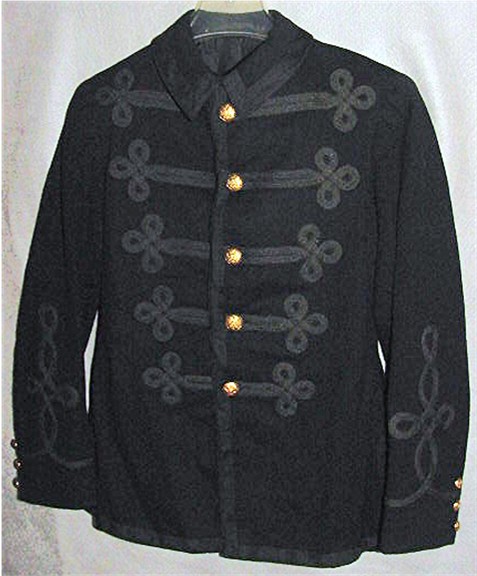
PATTERN 1872 OFFICER’S UNDRESS
UNIFORM COAT – EXCELLENT CONDITION SPECIMEN:
Introduced during a time
when most army officers did not wear, much less own, a
suit of civilian clothing, these Pattern 1872 Officer’s
Undress Uniform Coats were intended to be worn, as
stated in the regulations: “…for fatigues, marches,
squad and company drills, and other drills when a
authorized by the commanding officer, and for ordinary
wear….”. A simple design similar in cut to the
enlisted blouses of the era, these Undress Coats were
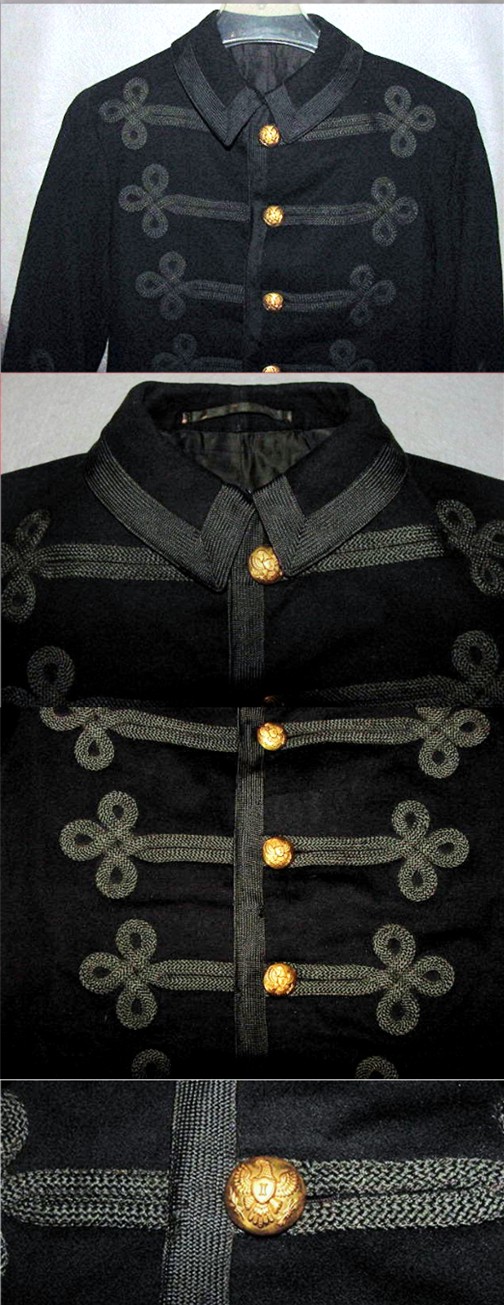
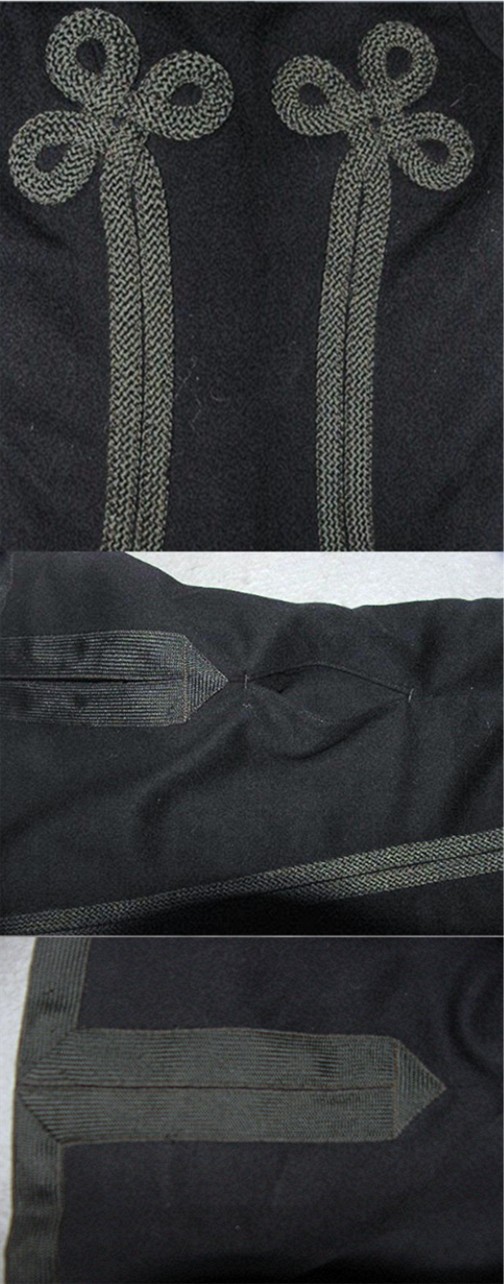
trimmed with a mohair braid highlighted with trefoils
which terminated each end of the braid surrounding the
buttons, creating a distinctive appearance for the
officer as he made his way through his daily routine.
This 1872 Undress Coat (also referred to as a blouse)
shows obvious signs of having been part of an officer’s
wardrobe, evidenced by the presence of
the identified maker’s
label, but it was gently worn, properly stored, and has
survived in excellent condition as a very respectable
specimen of genuine Indian War era uniforming worn on
the frontier.
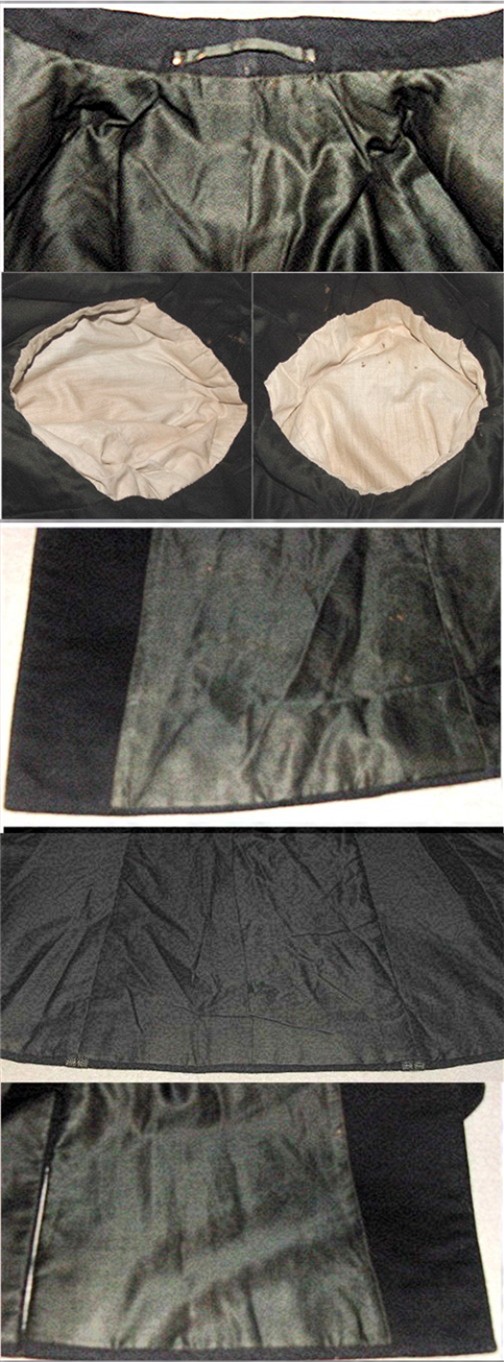
The maker’s label sewn in the inside right breast pocket
indicates this coat was produced by the famous firm of
Brooks Brothers in New York City. The handwritten
information on the label documents that the coat was
made for Captain K. R. McAlpin in 1900. Kenneth Rose
McAlpin was born February 22, 1882, son of General Edwin
A. McAlpin, commander of the New York National Guard 71ST
Regiment, New York Adjutant General, Mayor of Ossining,
New York, and president of the Boy Scouts of America in
1911. That the younger McAlpin entered the service is
of little surprise given the history of military service
of his father and brothers. While presumably already in
service, Kenneth joined the famous Troop A, Squadron A
Cavalry in 1912 and remained with the unit until
discharged in 1916. Upon the entry of the United States
into World War One, he was appointed as an Assistant
Surgeon with the rank of ensign in the U.S. Navy, and
was stationed at the U.S. Naval Air Station,
Killingholme, England. He returned to the U.S. in
November of 1918 and was discharged from the Navy in
1919. He enjoyed a long life, passing away in 1964 and
he is interred in the Dale Cemetery in Ossining, New
York.
Although this coat was made in 1900, there is no
question that it is a Pattern 1872 Officer’s Undress
Coat, made in the exact same style and decorated in the
exact same manner as those made during the height of the
Indian Wars.
The coat presents in as close to “like new” condition as
is possible, having been worn. There is no mothing,
wear spots, or damage of any kind to the dark blue
wool. The wool is very solid with no weak points, and
no open seams. There is no wear to the collar, cuffs,
or bottom edge of the blouse - unusual to find on these
original uniforms.
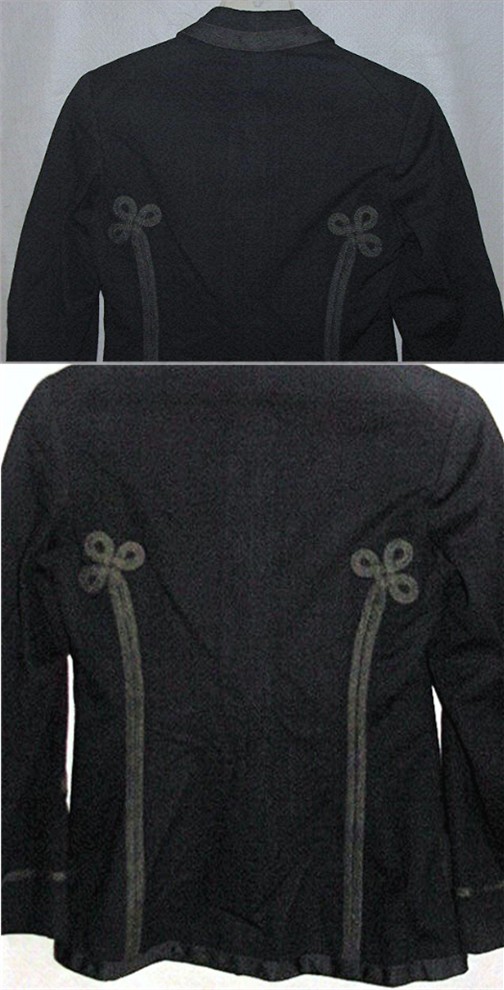
The collar, front and bottom edges, the back, and sleeve
cuffs are all trimmed with the regulation black mohair
braid. The most notable decorations to the coat are the
trefoils on the front of the coat, applied in pairs to
the right and left of each of the five buttons, and two
vertical strips of mohair trim topped with the trefoils
on the coat back. (The trefoils were referred to in the
regulations as “herring-bone loops”.) As dictated in
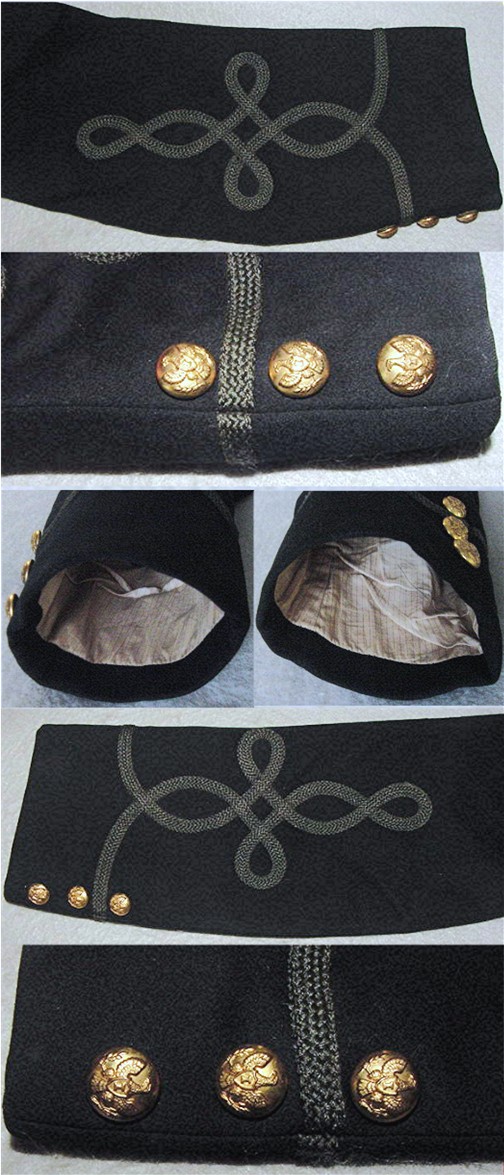
the regulations, each sleeve is decorated with “a knot
of black braid…..on the upper part of the cuff”. All of
the mohair braid is fully intact, securely sewn with no
loose spots, and in overall excellent condition with no
fading or wear.
The five original Indian War era buttons with the
distinctive “I” for infantry in the center of the shield
are intact down the front of the blouse. There are
three matching “I” cuff sized buttons at the cuff of
each sleeve. While these sleeve buttons were not
included in the regulations, some officers chose to add
them.
The body of the coat is lined with black/dark green
polished satin and the sleeves are lined with tan
striped satin. These linings are all in excellent
condition with no damage, and only a very few, very
minor, points of wear. There are no holes, just places
where the lining surface is worn.
Due to the day to day wear the coats were subjected to,
and that they were worn into field, and then coupled
with the limited number of officers in the army during
the Indian War, these coats are not particularly
common. This is a very respectable example of the
desirable Indian War Officer’s Pattern 1872 Undress
Coat, one which would be an attractive addition to your
collection, and would be difficult to upgrade. (0532)
$1875
|