|
MODEL
1879 HARTMAN “SPLIT SPRING” CARBINE SOCKET – ONE OF THE
MOST RARE OF THE INDIAN WAR HORSE EQUIPMENTS:
Designed by Sgt. Henry Hartman of the 1st
Regiment of Cavalry, and submitted to the Equipment
Board of 1878, the Model 1879 Carbine Socket, or Hartman
Socket as it is known by modern collectors, is one of
the few pieces of new horse equipment approved by the
1878 Board that survived being shelved by the
financially restrained army and was produced by the
arsenals, albeit in extremely limited numbers.
While
the details of the equipment presented to, and selected
by, the Board of 1878, and the ensuing discussion,
endorsements, approvals and eventual holds placed on the
production of new equipment until existing supplies of
equipment on hand had been sufficiently reduced has been
revealed in detail in a number of different published
works, there still exists some question as to the
quantity of the select pieces of Model 1879 Horse
Equipment that were eventually produced for trial or
regular issue. For example, records indicate the army
procured at least 570 Whitman Saddle trees, and a
contemporary field action report from a unit in the
Arizona Territory in the 1880’s specifically mentions
the Whitman Saddle in service in the field, however no
arsenal- produced Model 1879 Whitman Saddles are known
to exist today, and it is doubtful very many were
originally made. Conversely, the Model 1879 Saddlebags
while far from common today, do exist in sufficient
quantities to suggest a substantial number of them were
produced and issued – certainly more than the possible
570 saddles, based on the modern survival rate of the
saddlebags.
The
benefits of Hartman’s carbine socket were readily
recognized by the 1878 Equipment Board. The spring base
of the socket allowed for the rapid release of the
carbine, whether the carbine was being drawn for action
by the soldier or as it twisted free due to the soldier
falling from or being thrown from the saddle. The split
ring was regarded as a considerable advantage over the
Model 1859 Carbine Socket, particularly for the safety
of the soldiers connected to their carbines via the
heavy leather shoulder sling. Although the board
heartily recommended the socket be adopted and that
recommendation was endorsed by General Benet, Chief of
Ordnance, there is no record of how many were eventually
produced. Given the tremendous stocks of serviceable
Model 1859 sockets still in inventory and the
introduction of the 1st Pattern Carbine Boot
in 1885, it is not likely very many of the Hartman
Sockets were ever produced, perhaps only a limited
number for trial, and this low production is certainly
substantiated by the low survival rate in modern
collections. I personally actively sought one of these
for my own collection for many years and I found them to
be particularly elusive, identifying less than 10
scattered in collections across the country, and none of
them being for sale.
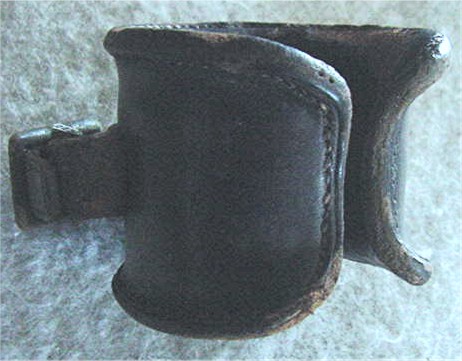
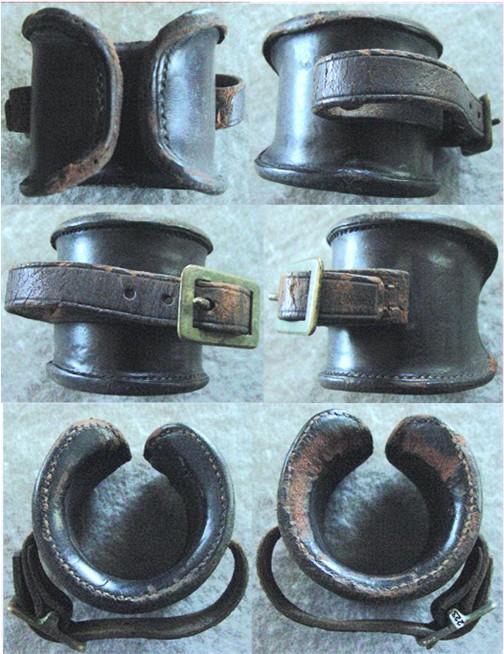
This
specimen is in very good condition, retaining a bright,
clear, smooth finish to the majority of the leather
surface. This socket does show use, which is all the
more compelling as it serves as confirmation that they
were indeed issued. There is some chafing to the flared
edge of both the top and bottom rims of the socket where
the carbine barrel would have worn against the socket.
This chafing is purely cosmetic and in no way affects
the integrity of the socket. All of the seams are
intact, the retaining strap is full length and the brass
buckle is present. There are no arsenal marks or
inspector’s stamps, however this seems to be the case
with the few examples that have been examined.
One of
the truly rare and unique pieces of Indian War horse
equipment, this Hartman Carbine Socket will be an
exceptional addition to any collection. (0515) $1250
|